Bishop Kukah Expresses Regret Over Comments on Christian Persecution
Bishop Matthew Hassan Kukah of the Sokoto Catholic Diocese has expressed deep regret over the widespread misinterpretation of his recent comments on Christian persecution in Nigeria. In a statement released on December 9, the Bishop clarified that he has never denied the suffering of Christians, insisting that those attributing such claims to him have twisted his position. He emphasized the need for unity among Christians and urged the government to urgently address the country’s worsening insecurity, warning that the ongoing bloodshed “threatens our common humanity.”
 Martin
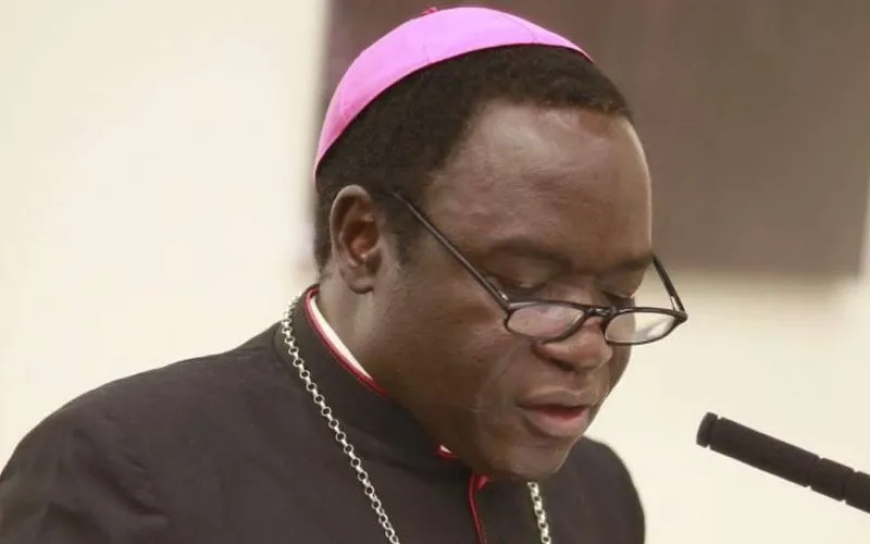
ABUJA — Bishop Matthew Hassan Kukah of the Catholic Diocese of Sokoto has expressed deep regret over what he describes as a “misinterpretation” of his position on the plight of Christians in Nigeria, saying he is “sincerely sorry” for the pain caused by claims attributed to him.
In a statement released on Tuesday, December 9 by the Diocese of Sokoto, Bishop Kukah dismissed allegations suggesting he denied the persecution of Christians in the country. He said the controversy, which had trended for more than a week, was based on “multiple false claims.”
“I am sincerely sorry to be associated with representations that understandably are a source of great pain and mental anguish to so many of my brothers and sisters within the body of Christ,” the Bishop stated.
He insisted that those circulating such claims had ignored the clarity of his remarks. “Nothing could be further from the truth,” Kukah emphasized. “I am baffled that despite the clarity of my position, there appear to be determined efforts to ascribe to me a position as saying that there is no persecution of Christians in Nigeria.”
A Controversy Fueled by a Rome Speech
The backlash against Bishop Kukah stemmed from his remarks at the launch of Aid to the Church in Need’s 2025 World Report on Religious Freedom, held on October 21 at the Augustinian Patristic Pontifical Institute in Rome. In his presentation, the Bishop said he did not believe that only Christians were being targeted in Nigeria’s worsening security crisis.
He noted that extremist groups that initially attacked churches, kidnapped priests, and targeted Christian institutions have since turned against Muslims who do not subscribe to their ideology.
“These floods of blood in Nigeria have no boundaries,” he said, adding that the violence is now indiscriminate and driven by terrorist groups whose motives extend beyond religion.
However, critics argued that his comments failed to reflect the depth of suffering endured by Christian communities. Fr. Stan Chu Ilo of the Pan-African Catholic Theology and Pastoral Network said Kukah’s remarks did not capture “the deep anguish of believers living under the shadow of violence and fear.”
Fr. Ilo contrasted Kukah’s stance with that of Bishop Wilfred Chikpa Anagbe of Makurdi Diocese, who has repeatedly described the situation as a genocide against Christians, citing parish closures and mass displacements caused by militia attacks.
Kukah’s Defence: ‘I Did Not Deny Persecution’
In his December 9 statement, Bishop Kukah clarified that he has consistently spoken about the persecution of Christians. He said his recent remarks at the Knights of St. Mulumba convention in Kaduna on November 28 were intended to emphasize accuracy and unity, not denial.
“For the records, I did not say that Christians are not persecuted in Nigeria!” he insisted.
During that address, Kukah questioned claims that “1,200 churches are burned every year” in Nigeria, saying such figures must be verified. He also explained that terms like “genocide” must be used carefully, as intent — not only the scale of violence — defines the crime.
“You can kill 10 million people, and it still won’t amount to genocide. What matters is intent,” he stressed.
Still, the Bishop maintained that Christian communities in Nigeria are indeed suffering from persecution and that he has consistently highlighted this reality over the years.
Bishop Kukah further urged Nigerians, especially Christians, to remain focused on confronting the escalating insecurity rather than being distracted by misinterpretations.
“These moments are too serious for us to equivocate,” he said. “This is not the time for us to retreat or be distracted. This is a contest that we must win.”
He also emphasized the need for Christian unity, arguing that Nigeria’s Christian community possesses the resources and capacity to stand stronger against persecution if united.
Calling on government and security agencies, Kukah said the state must urgently bring perpetrators of violence to justice. He warned that official inaction or failure was worsening national insecurity and creating “an appearance of disagreement without difference.”
“The bloodshed needs to end as soon as yesterday because our common humanity is at stake,” he said.