Poor Plastic Waste Management Drives Flooding in Lagos — Expert
 Margaret ABAH

By Abah Margaret
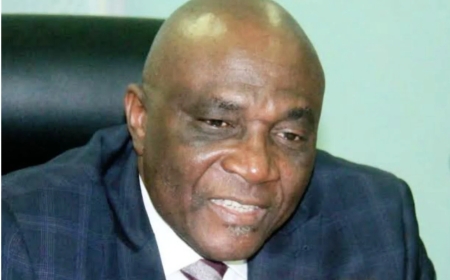
A waste and environmental sustainability expert, Dr Olufemi Idowu-Adegoke, has identified poor plastic waste management as a major contributor to flooding in Lagos State.
Speaking to the News Agency of Nigeria on Tuesday, Adegoke called for a shift from a disposal-driven system to a circular economy anchored on recycling.
He revealed that Lagos generates over 13,000 tonnes of waste daily, with plastics — including sachet water, nylon, and bottles — forming a significant portion. These plastics often end up in drainage channels, canals, and lagoons, blocking water flow during rainfall and triggering flash floods.
“Plastics are lightweight and non-biodegradable. When not captured by recycling systems, they are easily washed into drains and remain in the environment for decades,” he said.
Adegoke noted that capturing between 30 and 50 per cent of plastic waste could significantly reduce flooding and environmental degradation.
“Every plastic bottle recycled in Lagos is one less blockage in the drainage channel and one less flood trigger,” he added.
While acknowledging the efforts of the Lagos Waste Management Authority since its establishment in 1977, Adegoke said the outcomes remain limited. Although the agency has built institutional frameworks, enforced regulations, and promoted public awareness campaigns, large-scale recycling is still weak.
He disclosed that plastic recycling rates in Lagos are currently between three and six per cent, while other recyclables record less than five per cent recovery. Only about 40 per cent of total waste generated is formally collected, leaving significant volumes in drains and the environment.
“The system is still largely ‘collect, transport and dump,’ with heavy reliance on landfill sites instead of recycling,” he said.
Adegoke cited weak enforcement of environmental policies, lack of mandatory waste sorting, and limited economic incentives as major constraints. He warned that Lagos is approaching a tipping point with rising population and consumption.
He recommended urgent scaling of recycling through coordinated actions across policy, infrastructure, finance, and behaviour. Key measures include:
- Adopting a recycling-first approach and decentralising infrastructure
- Strengthening community-based recovery systems
- Formalising and empowering informal waste workers through registration, licensing, and social protection
- Introducing stronger economic incentives such as deposit return schemes, Extended Producer Responsibility, tax credits, and import duty waivers on recycling equipment
- Investing in local processing capacity, including bottle-to-bottle plants
- Digitising the waste ecosystem to track materials, payments, and carbon savings
“Recycling must become more profitable than dumping,” he stressed.
He further urged that waste management decisions in Lagos should be based on life-cycle costs rather than initial capital outlay, highlighting that recycling generates long-term economic and environmental returns while landfills remain recurring liabilities.
Adegoke also identified structural challenges for recyclers, including irregular and contaminated waste supply, weak collection systems, high operating costs, limited access to finance, price volatility of recyclables, land constraints, and weak policy enforcement.
He emphasised the importance of formalising the sector through a recycling registry, cooperatives, dedicated recycling zones, enforcement of source separation, price support mechanisms, capacity building, and public procurement of recycled products to ensure stable demand.
“Lagos must shift from a ‘pay-to-dump’ model to a value recovery system driven by recycling. The government’s role is to formalise, empower, and scale the system that already exists,” he said.