Groups Fault Obi’s Call for Tinubu’s Resignation, Insist on Constitutional Process
 Margaret ABAH
By Margaret Abah
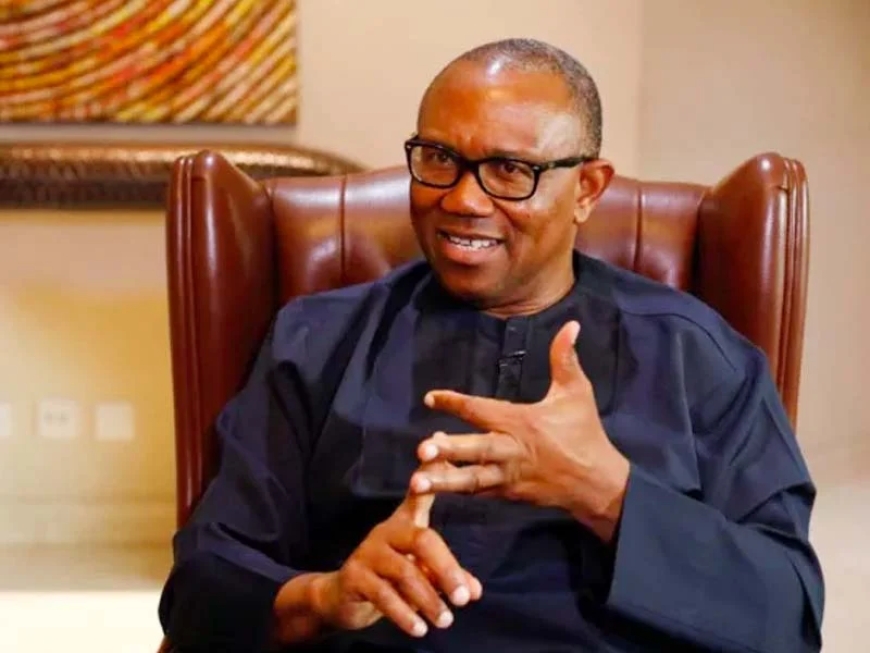
Two civil society organisations, the Grassroots Mobilisation Initiative (GMI) and the Democracy Watch Initiative (DWI), have criticised Labour Party presidential candidate in the 2023 election, Peter Obi, over his call for President Bola Tinubu’s resignation, describing the demand as unconstitutional and contrary to democratic principles.
In a joint statement issued on Wednesday, the groups argued that leadership changes in a constitutional democracy should be determined through elections and established democratic institutions rather than public pressure or political agitation.
The statement, signed by GMI Director of Media, Emeka Wogu, and DWI Director of Strategic Communications, Tunji Bamidele, accused Obi of engaging in what they described as “social media grandstanding” while overlooking reforms being implemented by the current administration.
According to the groups, Nigeria operates under a constitutional presidential system where elected leaders can only be removed through legally recognised processes and democratic mechanisms.
They maintained that recent elections held in various parts of the country reflected continued public participation in democratic governance and demonstrated that citizens remain committed to expressing their political preferences through the ballot box.
The organisations cited electoral exercises in states including Ekiti, Nasarawa, Enugu, Ondo and Rivers as evidence of sustained engagement with democratic institutions and constitutional processes.
Defending the Tinubu administration, the groups highlighted achievements in security, fiscal reforms, education, infrastructure development and the power sector.
They claimed that ongoing security operations had led to the clearance of criminal elements from several forest reserves and facilitated the return of displaced residents to some communities affected by insurgency and banditry.
The groups also credited recent fiscal reforms with increasing revenue allocations to states and local governments, arguing that the measures had strengthened the ability of subnational governments to fund grassroots development initiatives.
On education, they noted that public universities had remained operational without major disruptions from industrial actions and pointed to the Federal Government’s student loan programme as a significant intervention aimed at expanding access to higher education.
The organisations further cited infrastructure projects such as the Lagos-Calabar Coastal Highway, the Sokoto-Badagry Superhighway and the expansion of Compressed Natural Gas (CNG) infrastructure as indicators of the administration’s efforts to boost economic growth and improve transportation networks.
They also commended reforms in the electricity sector, particularly the implementation of the Electricity Act and the deployment of prepaid meters, which they said would reduce estimated billing and improve service delivery.
While acknowledging the economic hardship currently facing many Nigerians, the groups argued that some of the challenges stem from broader global economic pressures rather than domestic policies alone.
According to them, the 2027 general election will provide Nigerians with the constitutional opportunity to evaluate the administration’s performance and determine whether its policies deserve renewed support.
The groups urged opposition politicians to respect democratic institutions and pursue political change through constitutional means.
The statement comes amid growing political debate following recent criticisms of the Tinubu administration by Peter Obi, who has repeatedly expressed concerns over inflation, rising living costs and insecurity, arguing that current policies have worsened the economic situation for many Nigerians.
His remarks have continued to generate discussions among supporters of both the government and opposition parties as political activities gradually build towards the 2027 general elections.