Peter Obi Raises Concern Over Rising Poverty in Nigeria
 Margaret ABAH
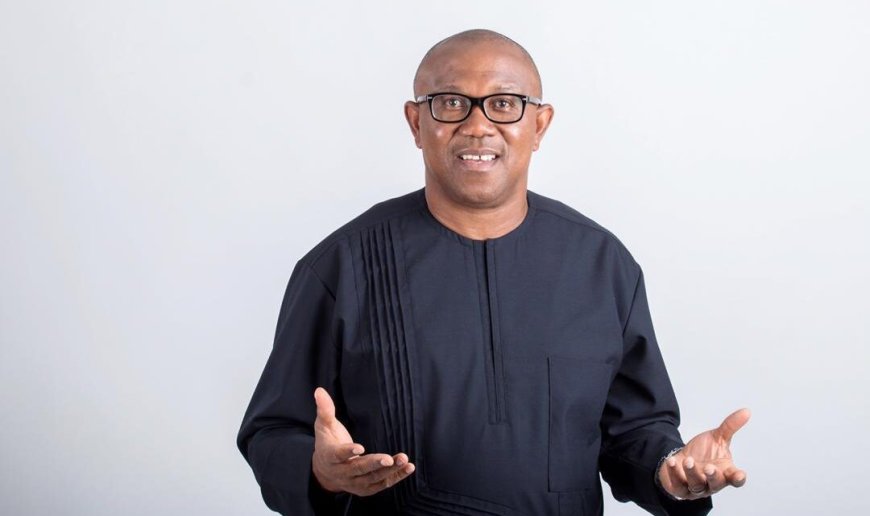
By Abah Margaret
Former presidential candidate in the 2023 election, Peter Obi, has raised concerns over what he described as a worsening poverty crisis in Nigeria.
Obi made the remarks in a statement shared on his official page, citing findings from a policy study released by Agora Policy.
According to him, the report indicated that Nigeria’s poverty rate has increased significantly in recent years.
“The poverty rate in our country has climbed from about 40 per cent before the current reforms to over 63 per cent today,” Obi said.
With Nigeria’s population estimated at more than 220 million people, Obi noted that the figures suggest over 140 million citizens could now be living below the poverty line.
“For a country whose population is estimated at over 220 million people, this means that well above 140 million Nigerians now live in poverty,” he stated.
The former governor of Anambra State added that many households across the country are struggling to meet basic needs such as food, transportation, rent and healthcare.
Obi also criticised what he described as a contrast between the economic hardship faced by ordinary Nigerians and government spending.
“You cannot ask the citizens to fast while you feast. Sacrifice must begin from the top,” he said.
He further stressed that economic reforms should prioritise the welfare of citizens and offer protection to vulnerable households.
However, the statement generated mixed reactions from users who commented on the post.
One user, identified as Igala Girl, criticised Obi, saying, “You’re writing about poverty like you weren’t part of the people who manufactured it.”
Another commenter, Chigozie, said the figures cited in the report raise concerns about the direction of economic reforms.
“If over 140 million Nigerians are living in poverty, we must ask who these reforms are really working for?” the user wrote.
Similarly, Kingsley Chinedu O described the situation as alarming, noting that the large number of people living in poverty reflects a serious national challenge.
Another commenter, M Onyema, questioned the level of accountability among political leaders, urging authorities to address corruption, insecurity and economic hardship.