Benue Community Forced to Drink Contaminated Water as Crisis Deepens, Calls on Governor Alia for Intervention
 Margaret ABAH
By Abah Margaret
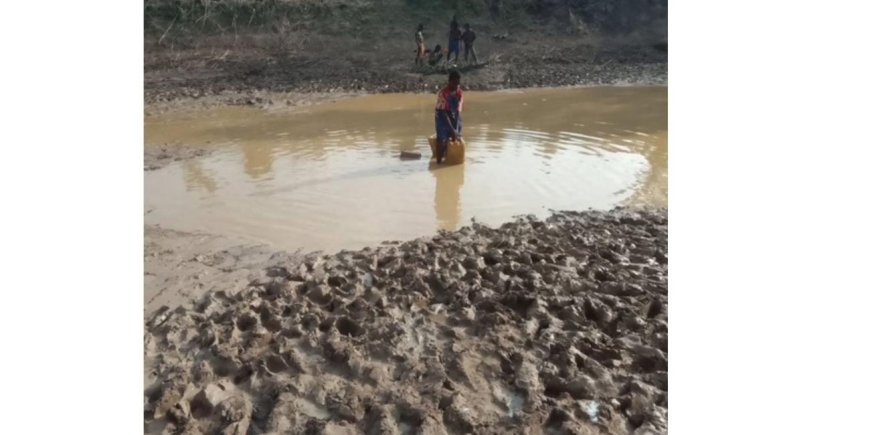
Residents of Okpokwu Council Ward are facing a worsening humanitarian situation as a severe water crisis leaves families struggling daily to access safe drinking water.
A report by civic technology organisation MonITNG described the conditions in the rural community as dire, calling for urgent government intervention.
“For this rural community, access to clean and safe drinking water has become almost impossible,” the report stated.
“What should be a basic human necessity has turned into a daily struggle for survival, as families are forced to rely on stagnant pools and shallow pits for water.”
The organisation warned that the water sources available are heavily contaminated, posing serious health hazards to residents.
“Women and children travel long distances in search of water, only to return with visibly murky and unsafe sources because they have no other option,” it added.
The report highlighted the immediate and long-term consequences of the crisis, including exposure to waterborne diseases such as cholera, typhoid, and severe diarrhoea.
“These illnesses spread rapidly in communities without access to safe water and often have devastating consequences, especially for young children and the elderly,” MonITNG stressed.
Beyond health risks, the crisis has socio-economic implications. The burden of sourcing water disproportionately affects women and children, reducing time for education, farming, and other productive activities.
“Carrying heavy containers over long distances causes injuries and exhaustion, particularly among young people. The time spent searching for water also means fewer hours for school, farming, and other productive activities,” the report noted.
MonITNG described the situation as unacceptable in a state often referred to as Nigeria’s “Food Basket.”
“It is deeply troubling that in Benue State, widely known as the Food Basket of the Nation, communities are still struggling with such extreme water scarcity,” the organisation said.
The group urged the Benue State Government and the Obi Local Government Council to act immediately, calling for emergency relief through water tankers to provide safe drinking water.
For long-term solutions, MonITNG recommended the construction of solar-powered industrial boreholes to ensure sustainable access to clean water and restore dignity, health, and safety to the people of Okpokwu.
“No community should have to face the risk of illness or death simply because they lack access to clean water. Immediate action is necessary,” the report concluded.