Now Ugbor Will Feel Like His Predecessors
 Martin

By Iorliam Shija
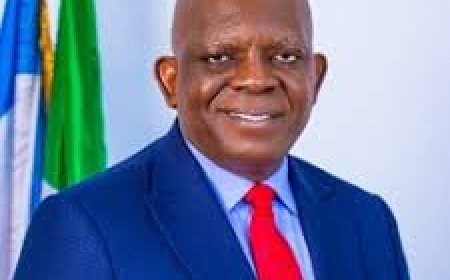
Today, Hon. Terseer Ugbor, the Member representing Kwande/Ushongo Federal Constituency in the House of Representatives, will begin to feel what many of his predecessors felt. His predecessors, especially Hon. Terfa Atii, Hon. Chile Wanger Igbawua, Hon. Benjamin Aboho, Hon. Iorember Wayo, and Hon. Bob Aondona Tyough, in my estimation, performed creditably in their first terms, yet none had the opportunity of re-election.
Since the advent of the Fourth Republic in 1999, the Kwande/Ushongo Federal Constituency has never returned a member for a second term. This is not necessarily because of poor performance. Rather, shifting sentiments largely driven by zoning considerations and related political calculations, have made continuity extremely difficult.
When democratic governance returned in 1999, Moses Atuha Tor Gbande from Kwande Local Government had the honour of representing the constituency until 2003. He was replaced by Terfa Atii (2003 to 2007) from Ushongo Local Government. Although there was a strong consensus that Atii deserved a second term (2007–2011), circumstances conspired against him, and Chile Igbawua from Ushongo, emerged instead.
By 2011, the balance sheet showed that Kwande had held the seat for only four years, while Ushongo had occupied it for eight. To restore balance, Benjamin Aboho from Kwande was elected. Logically, one would have expected the seat to return to Ushongo afterward, but that did not happen. The seat remained in Kwande, moving from Aboho (2011–2015) to Iorember Wayo (2015 -2019), then to Bob Aondona Tyough (2019–2023), and now to Terseer Ugbor still from Kwande.
By June 2027, when Ugbor completes his first term, Kwande would have held the seat for a cumulative twenty years, while Ushongo would have had only eight. This stark imbalance explains why zoning sentiments are once again being raised. This is despite the fact that Ugbor has performed commendably and, if re-elected, would return as a ranking member capable of delivering even greater dividends to the constituency.
The critical question, therefore, confronts the people of Kwande and Ushongo is should competence and proven performance be sacrificed on the altar of zoning, or should zoning give way, just this once, to reward effective representation and ensure continuity? The decision they make will not only determine Ugbor’s political fate as he declares for a second term, but will also signal whether the constituency values results over rotation, and progress over precedent.